

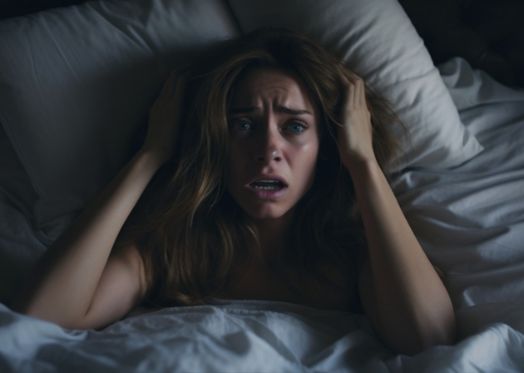
What Causes Panic Attacks at Night?
- Stress: Daily worries can affect your mind and sleep.
- Overthinking: Too many thoughts can make it hard to relax.
- Anxiety: Ongoing anxiety may increase the risk of panic attacks.
- Poor Sleep: Lack of sleep can make stress harder to manage.
- Major Life Changes: Work pressure, family problems, or personal changes can cause emotional stress.
Common Symptoms of Panic Attacks at Night
- A fast or pounding heartbeat
- Sweating or shaking
- Shortness of breath
- Chest discomfort
- Dizziness or weakness
- A sudden feeling of fear
- Feeling out of control
How to Calm Yourself During Panic Attacks at Night
A panic attack can feel really strong. There are some easy things you can do to start feeling better.
Breathe Slowly: Take slow breaths.Don’t push yourself to breathe.
Sit Comfortably: Find a place where you feel safe and, at ease.
Notice Your Surroundings: Look around. Say a few things you can see. Relax Your let go of tension in your shoulders, hands and legs.
Remind Yourself: Tell yourself that this feeling is temporary. Also, try not to keep checking the time. Instead, take a moment to calm down.
When Should You Seek Professional Help?
If nighttime panic attacks happen often they can interfere with your sleep. Make daily life difficult. In cases it is important to talk to a healthcare professional. Also do not assume that every instance of chest pain or trouble breathing is a panic attack. If you have severe or unexplained symptoms seek urgent medical care right away. Your health matters.
Final Thoughts
Nighttime panic attacks can mess up your sleep. Make you feel uneasy. I know how tough it is when nighttime panic attacks keep you up. The right care can help you learn and control panic attacks. With therapy, healthy habits and professional help you can move toward nights and better sleep. Remember, asking for help is a first step.